
DentalPRO
A website for a complex B2B product shaped around different choice scenarios.
DentalPRO website redesign: how we packaged a complex
Challenge
DentalPRO is a medical information system (MIS) for effective
management of dental clinics of any scale. The product developer,
DionSoft, approached OKC.Media with a task to create a new website
that would position DentalPRO as a leading dental MIS —
competing with solutions like SQNS, 1C: Dentistry and
The previous website did not reflect DentalPRO’s values and competitive advantages and did not account for audience segmentation. The client provided a clear vision of the goals and the future structure of the website, which needed to detail:
- product capabilities,
- advantages over competitors,
- relevance for different target audiences,
- key arguments to support the purchase decision.
Strategy
Choosing an MIS for a dental clinic is a complex task that depends on
many factors: clinic scale, staff roles and
We started with a series of in-depth interviews with the client team
— sales and marketing specialists. This helped us identify real
pain points and understand priorities for the future website
structure.
Then we analyzed user journeys based on:
- clinic size,
- the decision-maker’s role,
- key tasks the system must solve.
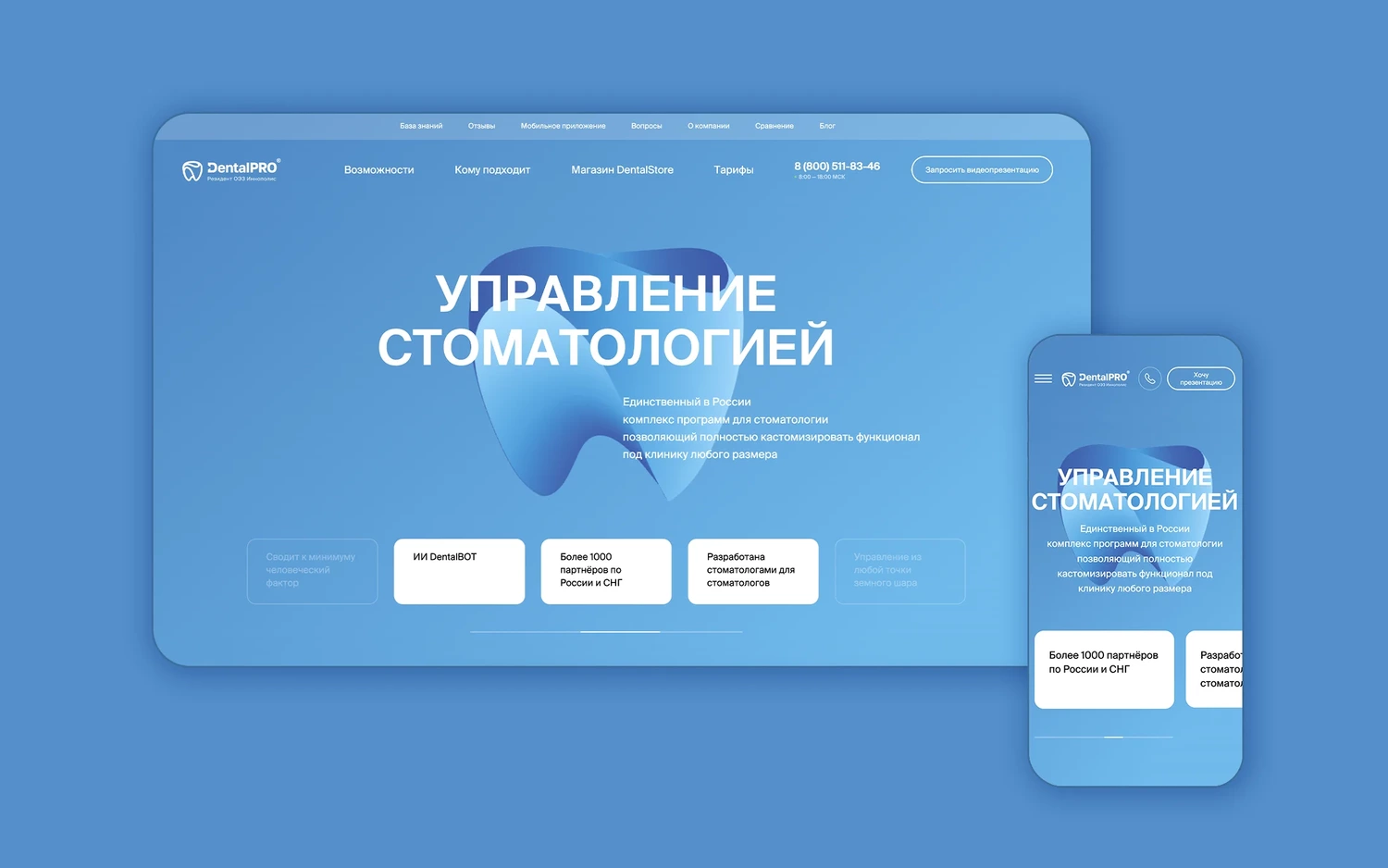
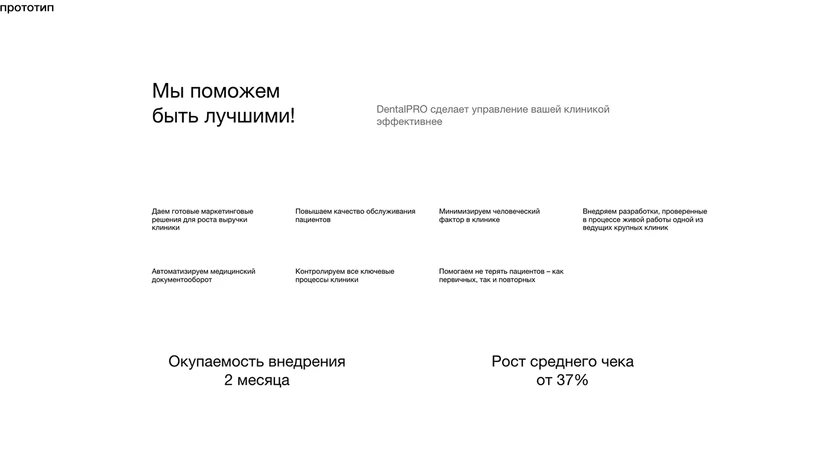
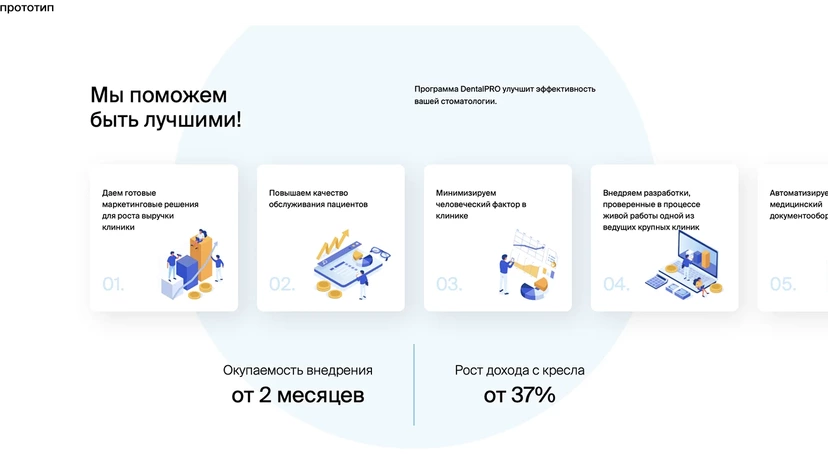
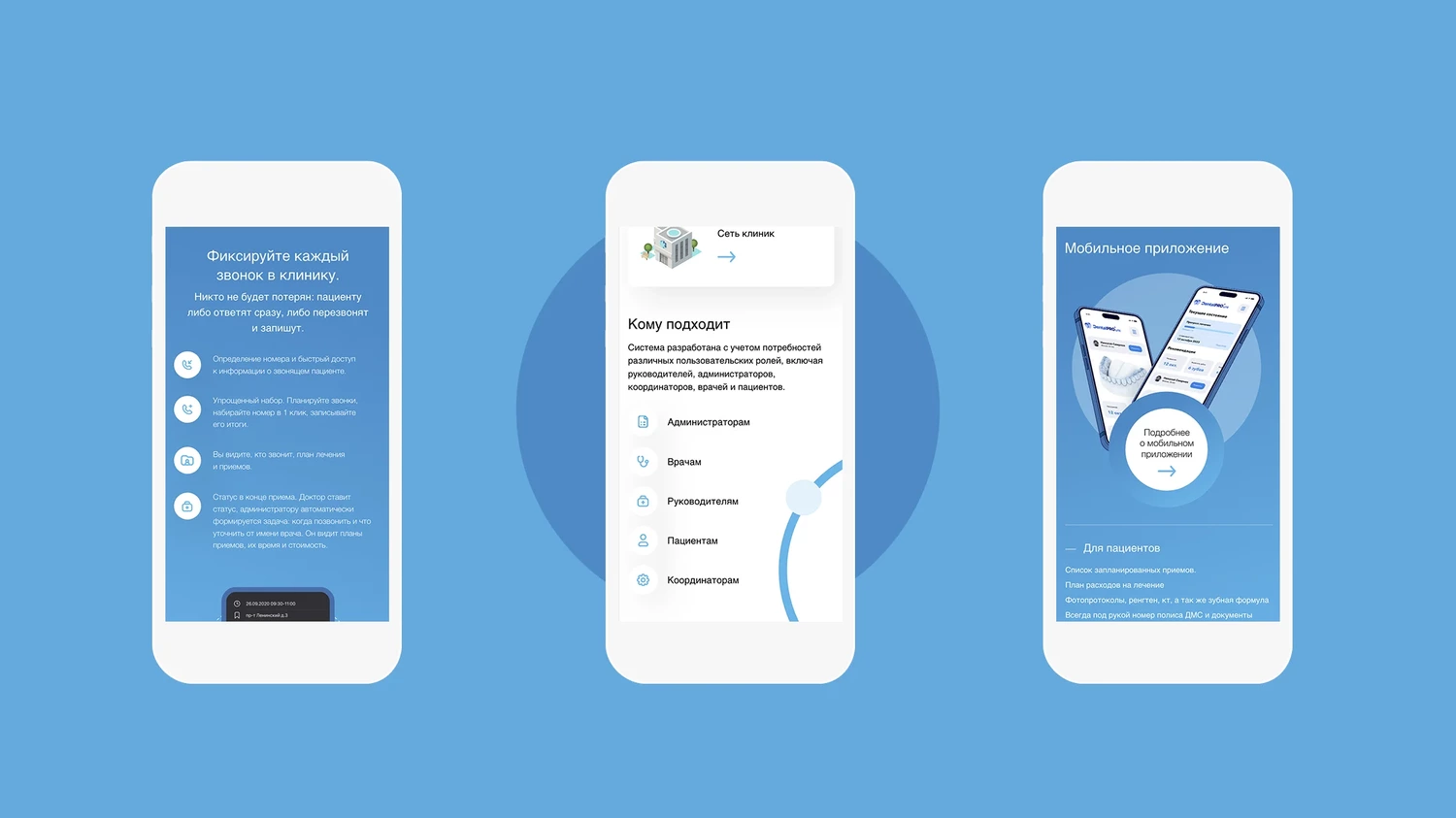
This case study includes project images: interface screens, visual materials, and examples of implemented solutions.
Based on this, we created a map of user scenarios and a content matrix
tailored to different roles and stages of decision-making.
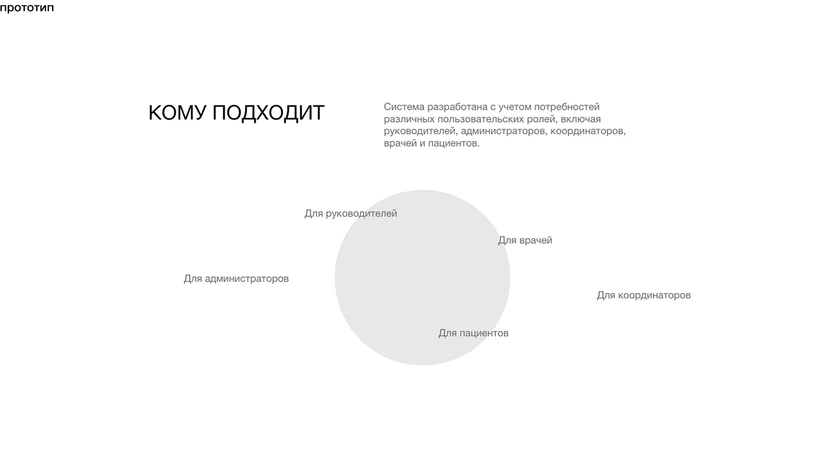
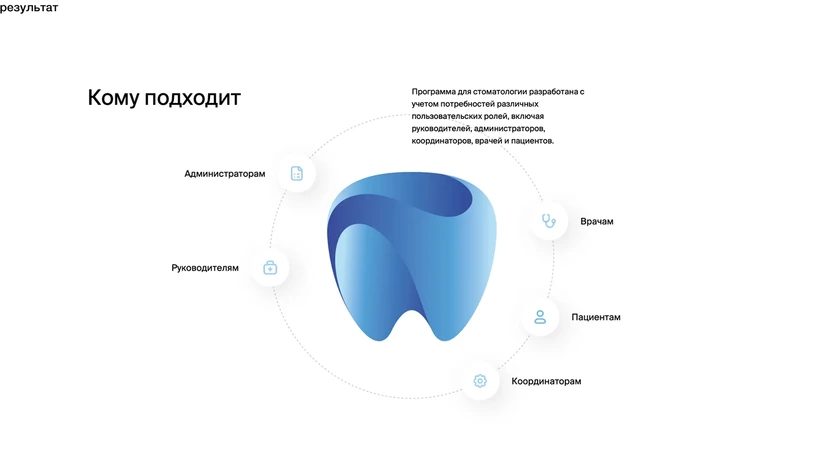
For new users, we built an information architecture explaining how
DentalPRO helps each participant in the process:
- patient,
- doctor,
- administrator,
- coordinator,
- clinic owner/manager.
For existing customers, we included a knowledge base and DentalStore, where users can choose and connect necessary modules and integrations.
Two key personas: chief doctor and entrepreneur
We defined two key user archetypes:
Doctor — an expert focused on standardizing treatment and building medical processes.
Entrepreneur — focused on automation, profit growth and scaling the business.
These roles often overlap within one person or team, but they affect priorities when choosing a system. We reflected this in the website structure and content presentation.
Creative direction and visual concept
A tooth symbol is recognizable but often a cliché in dental
branding. We took a different approach: we created a minimalist visual
based on the logo symbol. A rotating
On the first screen, users immediately see a condensed overview of the product’s benefits, while a subtle animation helps capture attention in the first seconds of interaction.
The interface uses a modular design with pinned navigation for quick access to features. Components follow the DentalPRO brand style with a strict yet lightweight UI, avoiding visual noise.
User experience
The website is a clustered system of landing pages grouped by:
- clinic size,
- user role,
- required capabilities.
In total, we implemented 8 user scenarios and 24 feature landings,
including: electronic medical records, dental chart,
Key conversion actions on the website:
- requesting a product video presentation,
- comparing plans,
- getting implementation terms,
- connecting integrations.
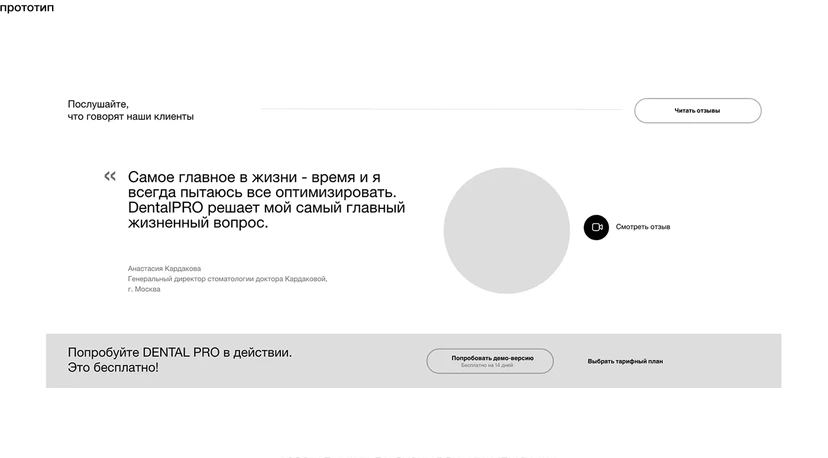
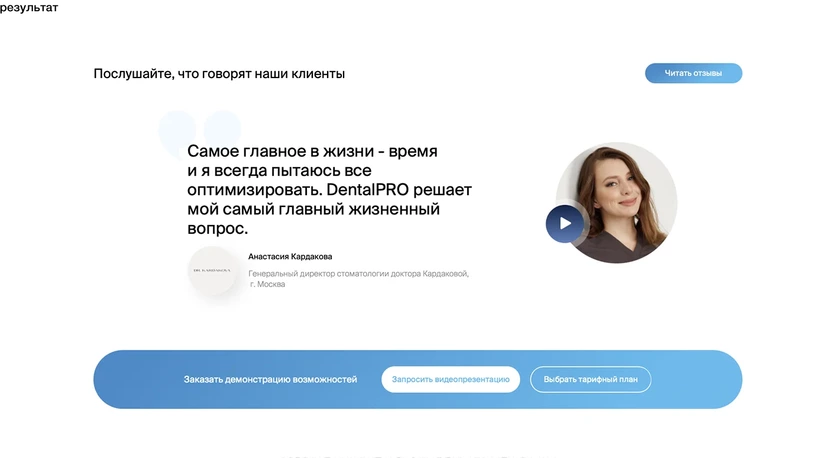
Additionally, we introduced contextual testimonials — real stories where users explain how specific modules or product features helped their clinic.
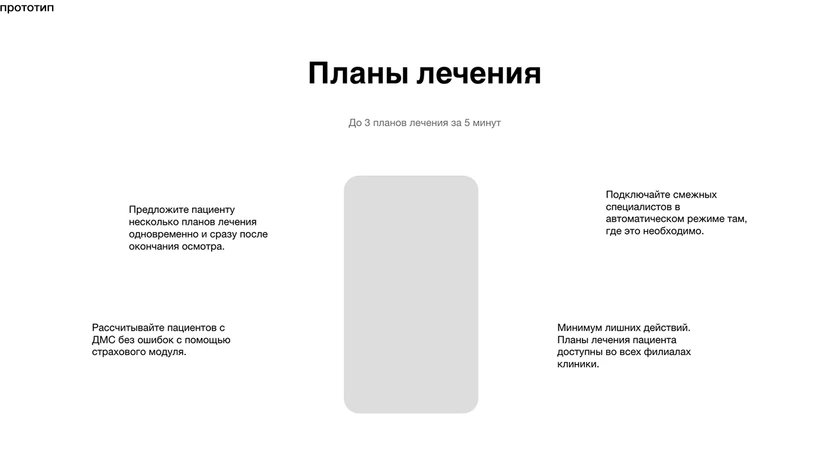
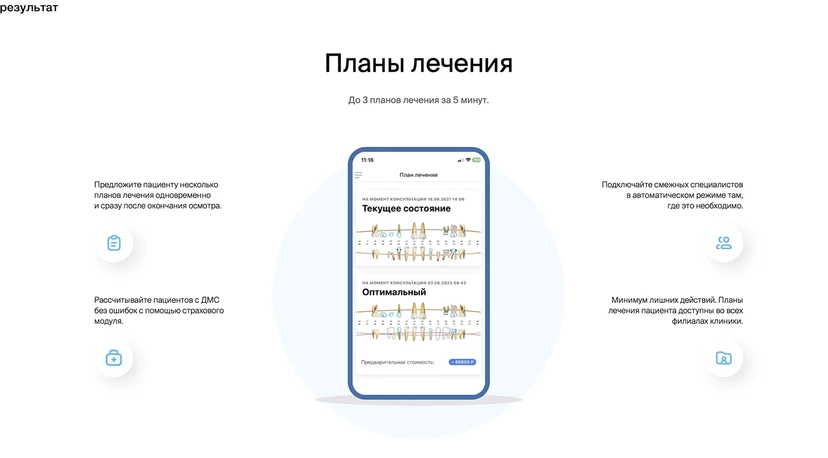
Pricing calculator
The “Pricing” section is implemented as a convenient interactive calculator that helps:
- estimate the system cost for a specific clinic,
- compare DentalPRO and DentalPRO Lite editions.
Development
The site’s visual language is focused on engagement and highlighting key product capabilities.
During a
UI components were designed based on the DentalPRO brand book with a focus on three values — simplicity, functionality and expertise.
We used the following technologies:
-
Backend:
1C-Bitrix , a CMS familiar to the client. - Integrations: Bitrix24, Calltouch, lead transfer with traffic source attribution.
- Frontend: optimized loading, image delivery via Yandex CDN.
Outcome
The new DentalPRO website became a full-fledged digital entry point to the product: it reflects the depth of the system’s capabilities, demonstrates competitive advantages, and supports different user types — from doctors to clinic owners.
We showed that even a complex
The project laid a solid foundation for scaling, A/